NEW GUEST SPECIAL 20% OFF FIRST SERVICE (Excluding Injectables)
What actually happens during crystal massage therapy, why it works, and where Nassau County residents can experience it under real medical supervision.

You’ve probably tried the standard options. A Swedish massage that felt good for a day. A deep tissue session that left you sore in a different way. Maybe a facial that looked great in the mirror but faded by the weekend. At some point, you start wondering if there’s something that actually resets you — not just your muscles, but the whole system.
Crystal massage therapy is one of those treatments that sounds like it belongs in a wellness magazine but, when it’s performed properly, delivers something genuinely different. Here’s what it actually involves, how it works, and what sets a medically supervised experience apart from a standard spa visit.
Crystal massage therapy combines traditional hands-on massage technique with the intentional use of healing crystals and gemstones — applied directly to the body, used as massage tools, or placed along energy points to support balance and release. The stones most commonly used include rose quartz, amethyst, black tourmaline, obsidian, and clear quartz, each selected based on the therapeutic goal of the session.
The physical benefits are grounded in real mechanisms. Smooth-surfaced stones glide over muscle tissue with consistent pressure and, when warmed, create a thermotherapy effect that hands alone can’t replicate. The result is deeper muscle relaxation, improved circulation, and a more complete release of tension — especially in areas like the neck, shoulders, and lower back where chronic tightness tends to accumulate.
What makes crystal massage distinct isn’t just the tools. It’s the intentionality behind the session. Every stone selection, every placement, every technique is chosen with a specific outcome in mind — whether that’s stress relief, energetic grounding, or targeted muscle recovery. We’ve integrated this modality into our Nassau County practice because it addresses both the physical and energetic dimensions of tension in a way that standard massage alone doesn’t.

Not every crystal does the same thing, and a well-trained therapist doesn’t reach for whatever looks nice. Rose quartz is often used for its association with calming energy and circulation support — it’s a common choice for facial and upper body work. Amethyst is favored for stress relief and nervous system support, making it a natural fit for sessions focused on anxiety or sleep disruption. Black tourmaline and obsidian are denser stones typically used for grounding and deeper muscle work, while clear quartz is considered an amplifier — it’s often used to reinforce the effects of other stones in the session.
The thermal properties of the stone matter too. Crystals conduct and hold heat differently than basalt river stones, which are the standard in hot stone massage. Some crystals are used at room temperature for their texture and energetic properties, while others are gently warmed to add the circulation-boosting benefits of thermotherapy. A skilled therapist knows the difference and applies each stone with purpose.
This is also where the quality of the provider becomes critical. At-home crystal tools — rollers, gua sha stones, palm stones — are widely available, but the technique behind them is what drives results. Pressure calibration, direction of stroke, duration of contact, and the integration of crystals into a broader massage protocol are all things that take real training to execute well. When you’re working with a licensed massage therapist who has specific training in crystal modalities, the session is categorically different from something you can replicate at home.
For Nassau County residents who’ve been curious about crystal healing but weren’t sure whether it was legitimate or just trending, the answer is somewhere in the middle — the spiritual tradition is real and ancient, and the physiological mechanisms are also real. You don’t have to choose between the two.
If you’ve used a jade roller or a gua sha stone at home, you’ve already experienced a version of face massage stone therapy. But there’s a meaningful gap between what those tools can do in your bathroom and what a trained therapist can deliver in a clinical setting.
Gua sha — a traditional Chinese technique that uses a smooth stone to apply pressure and scraping strokes across the skin — has been practiced for over 2,000 years. Modern research has caught up with the tradition: a study published in Complementary Medicine Research found that professional gua sha can increase microcirculation in the treated skin by up to 400%. That’s a measurable physiological response that explains why clients leave a professional session looking visibly lifted and less puffy.
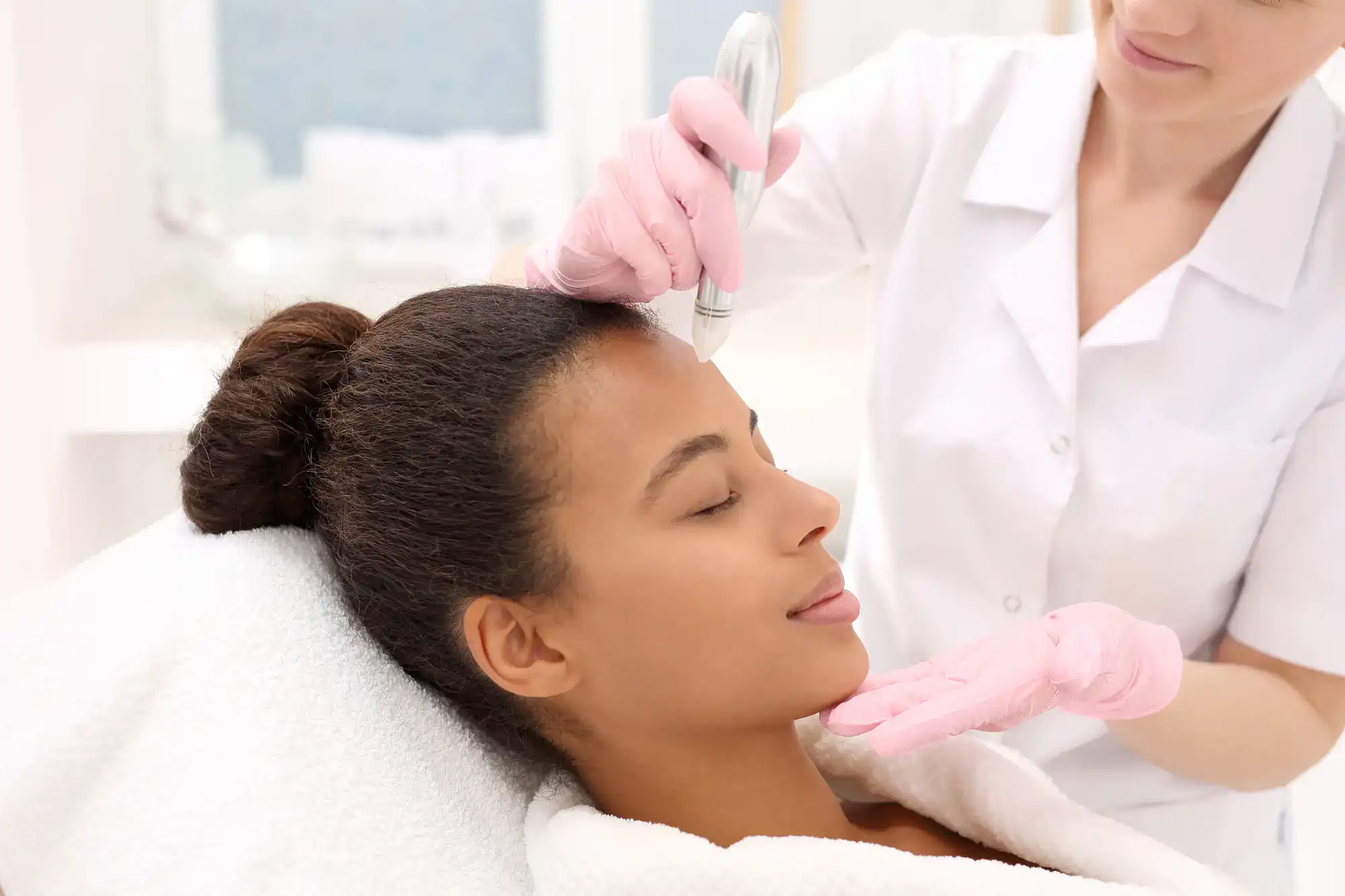
The difference comes down to technique. A professional therapist controls the angle, pressure, and direction of each stroke with precision that’s difficult to replicate on yourself. We also understand the facial anatomy well enough to work with lymphatic pathways — moving fluid toward drainage points rather than pushing it in ways that cause temporary swelling. When face massage stone work is done correctly, it supports lymphatic drainage, releases facial fascia, and improves the delivery of oxygen-rich blood to the surface layers of the skin.
At Beauty Lab, our face massage stone techniques are performed by New York State Licensed Massage Therapists — professionals who completed a minimum of 1,000 hours of training and passed the national licensing examination. That’s not the standard at every spa. In New York, the bar for licensed massage therapy is high, and it’s the baseline we start from before adding any specialized modality training on top of it.
For South Shore residents dealing with chronic puffiness, jaw tension from stress, or skin that looks tired despite a solid skincare routine, professional face massage stone therapy is worth understanding. The results aren’t subtle when it’s done well.
Want live answers?
Connect with a Beauty Lab Long Island expert for fast, friendly support.
Hot stone massage is one of the most clinically effective massage modalities available — and one of the most commonly misunderstood. Most people think of it as a luxury add-on, something warm and pleasant but not particularly therapeutic. That’s a significant undersell.
When heated stones are applied to muscle tissue, the warmth penetrates three to four times deeper than a therapist’s hands alone. This triggers vasodilation — blood vessels widen, circulation increases, and oxygen-rich blood moves into areas that have been tight and restricted. The muscle relaxes in a way that takes considerably longer to achieve through pressure alone. For anyone dealing with chronic tension, cold-weather stiffness, or the kind of deep knots that don’t respond to a standard massage, the thermotherapy effect is the difference.
Temperature management matters enormously here. Stones should be heated to a specific range and tested before application. Burns are the most common injury in poorly managed hot stone massage — which is exactly why the setting and the training of the provider aren’t details to overlook.
Long Island winters are real. From November through March, Nassau County residents along the South Shore are dealing with cold that settles into the body in a particular way — the kind of tension that accumulates in the neck and shoulders from hunching against the wind, or the stiffness that comes from sitting on a cold LIRR train for forty-five minutes each way into the city. That commute is a physical experience, not just a logistical one. Chronic neck tension, lower back tightness, and stress-related muscle guarding are extremely common among our commuter population — and hot stone massage addresses all three directly.
The warming effect of the stones also makes this modality particularly effective for people with fibromyalgia, chronic back pain, or conditions where standard pressure massage can feel overwhelming. The heat does a significant portion of the work before the therapist’s hands even begin, which means less pressure is needed to achieve a deeper release. For clients who find deep tissue massage too intense, hot and stone massage often delivers comparable therapeutic outcomes with a more comfortable experience.
Beyond the cold months, there’s a strong case for hot stone massage as a recovery tool for Nassau County’s active population. Anyone who spends their weekends at the beach in summer, cycling along the South Shore, or playing in one of the county’s many recreational sports leagues accumulates the kind of muscular fatigue that responds well to thermotherapy. The increased circulation accelerates recovery, reduces soreness, and restores range of motion in ways that rest alone doesn’t achieve on the same timeline.
At Beauty Lab, every hot and stone massage session begins with a health screening. That’s not a formality — it’s how we make sure the treatment is appropriate for you specifically. Certain conditions, including cardiovascular concerns, active skin issues, and some medications, can affect how thermotherapy is applied. Having a medical team on-site means those conversations happen before the session, not after.
Athletic massage therapy is not exclusively for professional athletes. That’s probably the most persistent misconception about the modality, and it keeps a lot of people from seeking something that would genuinely help them. If you run, cycle, play in a recreational league, coach youth sports, or simply have a physically demanding routine, you’re a candidate. Nassau County has one of the densest concentrations of youth sports programs in New York State — lacrosse, soccer, swimming, baseball — and the adults in those communities are often just as active as the kids they’re coaching or watching.
The difference between athletic massage therapy and a standard relaxation massage is the underlying framework. Athletic massage is built on sports medicine principles. Pre-event protocols use stimulating techniques to warm muscle fibers, increase range of motion, and prepare the body for performance. Post-event recovery protocols are focused on reducing delayed onset muscle soreness — clearing lactic acid buildup, and restoring tissue integrity after exertion. These are specific, goal-oriented interventions, not a general relaxation session with a sports-themed name.
The medical supervision aspect matters here more than in almost any other massage modality. Athletic massage therapy, when applied incorrectly to someone with an undiagnosed injury, a stress fracture, or a circulatory condition, can cause harm. Working in a setting where a physician and nurse practitioners are on-site means that intake screening is taken seriously. If something in your health history warrants a modified approach, we catch it before the session begins — not during it.
For Nassau County residents who’ve been managing recurring soreness with foam rolling and ibuprofen, athletic massage therapy offers a more effective alternative. One well-executed session with a trained LMT who understands sports physiology will do more for your recovery than a week of self-treatment. And for those dealing with a specific issue — a tight IT band, chronic shoulder tension from overhead work, or hip tightness from long hours at a desk — a series of targeted sessions can produce lasting structural change rather than temporary relief.
If you’ve been looking for this kind of treatment on the South Shore and coming up empty, you’re not imagining it. Crystal massage therapy, professional face massage stone techniques, and medically supervised athletic massage therapy are not widely available in Nassau County — which is exactly why we built them into our program.
We’re located on Merrick Road in Merrick, serving residents from Bellmore to Wantagh, Seaford to Freeport, and everywhere in between. Every session is performed by a New York State Licensed Massage Therapist, screened by our on-site medical team, and integrated into a personalized wellness plan rather than sold as an isolated treatment.
If you’re a new guest, your first service is 20% off. It’s a straightforward way to experience what a medically supervised, boutique wellness environment actually feels like — without committing to a full program before you’re ready. Reach out to us to learn more or schedule your first session.
Summary:
Article details:
Share: