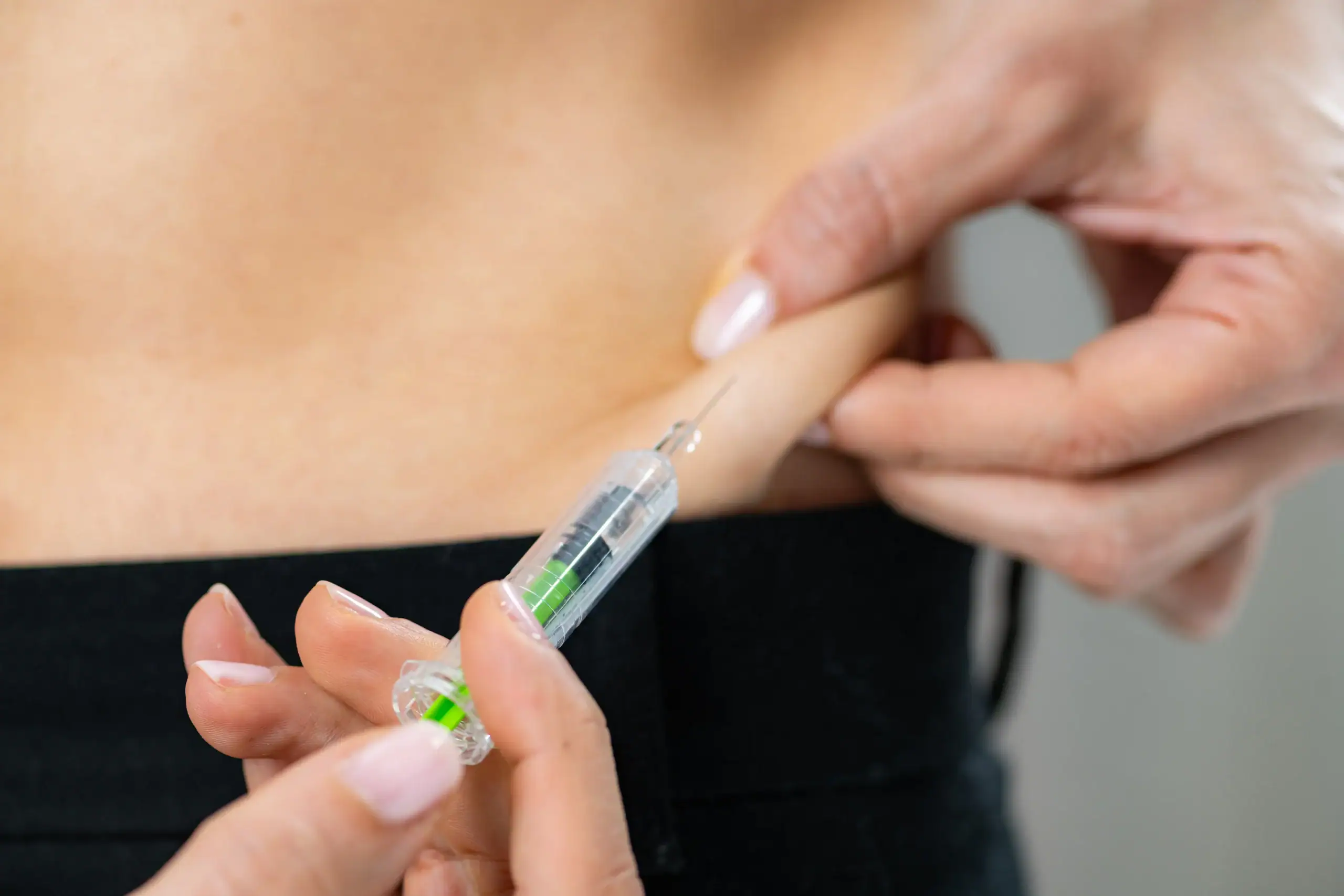
NEW GUEST SPECIAL 20% OFF FIRST SERVICE (Excluding Injectables)
Before you book an IV drip, know what separates a genuinely safe clinic from one that just looks the part. Here's what actually matters.
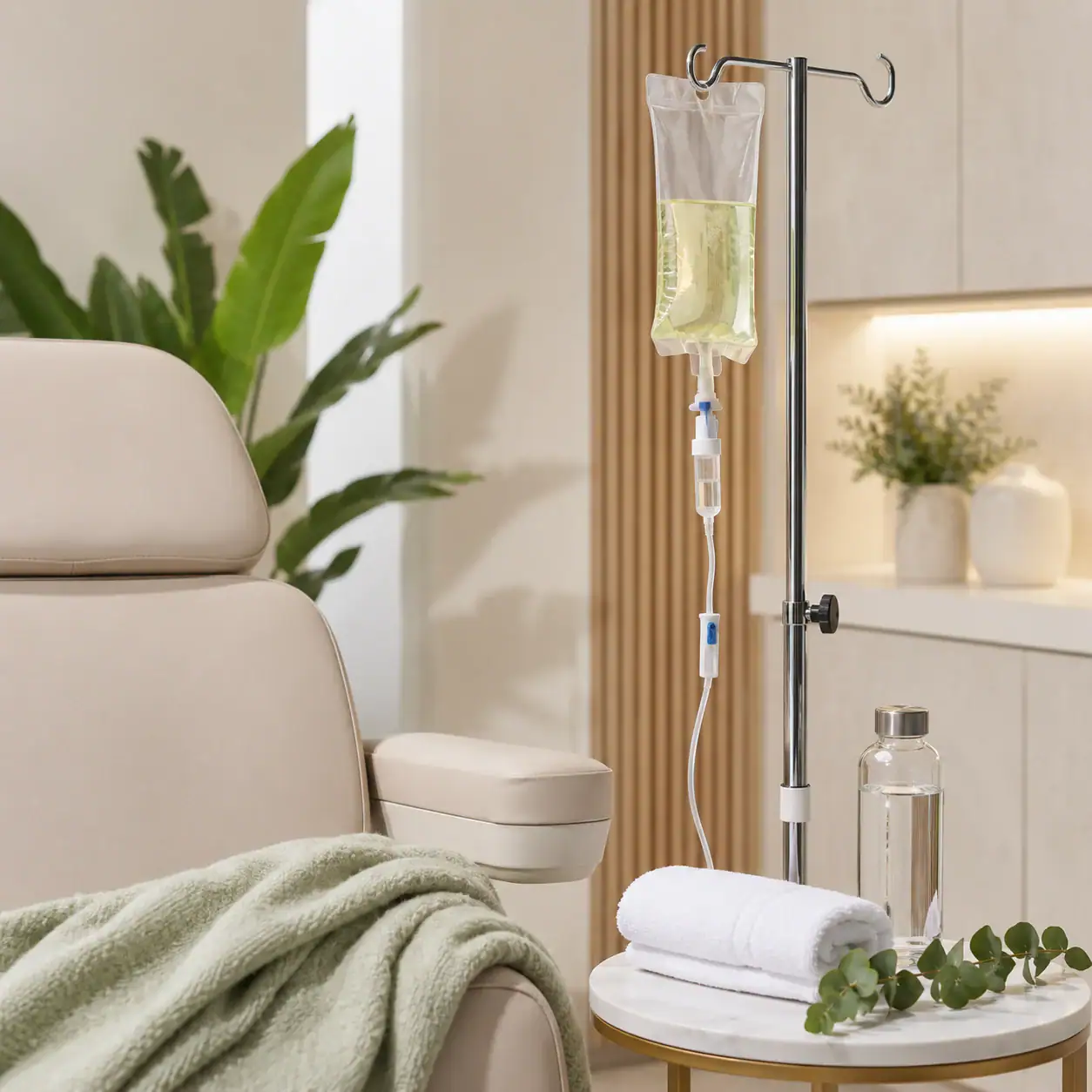
IV therapy has gone mainstream fast. What started as a recovery tool for athletes and hospital patients is now a regular wellness service for busy professionals, exhausted parents, and anyone who wants to feel and look better without a two-day recovery window. That’s a good thing — but the speed of the industry’s growth has outpaced the standards in a lot of clinics.
If you’re in Nassau County and researching IV drip options, you’ve probably noticed that not all providers look the same. Some have doctors on-site. Some list a medical director on a website and leave it there. Some operate out of a shared lounge; others offer private suites. The differences matter — and this page will help you understand exactly what to look for before you book.
The most important question to ask any IV drip clinic isn’t about the menu or the price — it’s about who’s actually in the room when the needle goes in. IV therapy involves direct access to your bloodstream. That’s not a reason to be afraid of it, but it is a reason to be selective about where you go.
Start with credentials. The person administering your IV should be a licensed registered nurse (RN), nurse practitioner (NP), or physician. Titles like “drip specialist” or “wellness coach” are not clinical credentials. They’re marketing language. If a clinic can’t tell you exactly who will be treating you and what their license is, that’s your first red flag.
Beyond the person holding the needle, ask about the medical director. A legitimate clinic has a physician who actively oversees protocols, approves formulations, and is reachable if something goes wrong — not just a name on a liability form.
The term “IV drip bar” gets used loosely, and that’s part of the problem. A drip bar typically operates more like a retail wellness concept — walk in, pick a drip from a menu, sit in a shared lounge, and leave. The experience is designed around convenience and aesthetics. The clinical oversight, in many cases, is minimal.
An IV therapy clinic operates differently. It functions within a medical framework, which means there’s a physician or nurse practitioner involved in your care — not just in the paperwork. Your health history is reviewed before treatment. Your vitals are checked. The formulation you receive is appropriate for your specific situation, not just the most popular option on the menu.
In New York State, this distinction carries legal weight. New York is what’s called a Corporate Practice of Medicine (CPOM) state. That means IV therapy is legally considered the practice of medicine, and physician involvement isn’t optional — it’s required. The problem is that “required” doesn’t always mean “enforced,” and plenty of drip-bar-style operations exist in a gray area where a physician lends their name to the business without genuine day-to-day involvement. Consumers rarely know this is happening.
What you want is a clinic where the medical oversight is real and present — not performed for the sake of compliance. That means a physician or NP who has actually reviewed your intake, approved your formulation, and is available if something unexpected happens during your session. It also means staff who are trained to recognize and respond to adverse reactions, with emergency equipment on-site. An EpiPen and an AED aren’t dramatic precautions — they’re basic standards that any responsible IV therapy clinic should have.
The environment matters too, but for different reasons than you might think. A clean, well-organized clinic signals that the people running it take the clinical side seriously. Private treatment spaces reduce the risk of cross-contamination and give your clinician the ability to monitor you properly. These aren’t luxury details — they’re functional ones.
You shouldn’t have to dig to find out who’s treating you. A reputable IV therapy clinic will tell you upfront — on their website, during your intake call, or when you walk in — exactly who is on staff and what their qualifications are. If that information is buried, vague, or missing entirely, treat it as a signal.
Here’s what genuine medical supervision looks like in practice. Before your first session, you complete a health intake that covers your medical history, current medications, allergies, and any conditions that might affect how your body responds to IV therapy. That information is reviewed by a licensed clinician — not a receptionist — before your formulation is prepared. Your vitals are taken and recorded. The IV bag is mixed fresh, using pharmaceutical-grade ingredients, and opened in front of you. Your clinician stays present during the infusion, not just for the setup.
The ingredient question is worth raising directly. A good clinic will tell you exactly what’s in your drip and why. If the answer is vague — “a blend of vitamins and electrolytes” — push for specifics. You have every right to know what’s entering your bloodstream, and any clinic that’s confident in their formulations will have no problem explaining them.
One more thing worth checking: what happens if you have a reaction? It’s uncommon, but it does happen. Allergic responses, vein irritation, and electrolyte imbalances are all possible. A clinic that’s prepared for this will have emergency protocols, on-site equipment, and staff who are trained to respond. A clinic that’s not prepared will have a phone number to call. Those are very different situations, and you want to know which one you’re walking into before you’re in it.
The bottom line is that a little research upfront goes a long way. Ask about credentials. Ask about the medical director’s actual role. Ask what happens in an emergency. A clinic that answers these questions clearly and without hesitation is a clinic that’s operating the way it should.
Want live answers?
Connect with a Beauty Lab Long Island expert for fast, friendly support.
Nassau County’s wellness market has grown significantly over the past few years, and the options available to residents today are genuinely different from what existed even five years ago. But more options also means more variation in quality — and in a county where the average commute to the city runs close to 40 minutes each way, the last thing you want is to spend an hour in a shared drip lounge that doesn’t meet basic clinical standards.
What a quality IV experience looks like, in practical terms, is a clinic that treats the session as a medical service and a personal one at the same time. The clinical side — credentials, oversight, sterile protocols, emergency preparedness — is non-negotiable. But the experience itself should also feel like something worth your time and your money.
There’s a functional reason that private IV suites are worth seeking out, beyond the obvious comfort factor. When you’re in a shared space, your clinician’s attention is divided. In a private suite, the person responsible for your infusion is focused on you — monitoring how you’re responding, checking in throughout the session, and available if anything feels off. That’s not a small thing when you’re connected to an IV line.
We designed our IV suites in Merrick specifically around this idea. Each suite is private, equipped with a massaging chair and streaming entertainment, and set up so that your session is genuinely restorative — not just medically sound but actually relaxing. We greet every client with lemon water and a healthy snack, because the 45 to 60 minutes you spend with us should feel like a reset, not an errand.
We also integrate IV therapy with the rest of our wellness and aesthetics services, which means you’re not making three separate appointments at three different places. If you want to follow your drip with a lymphatic drainage massage, or you’re already coming in for a facial or injectables, we can build that into a single visit. For Nassau County clients managing full schedules — whether you’re commuting to the city, running a household, or both — that kind of efficiency is genuinely useful.
Our mobile IV therapy option exists for the same reason. When coming into our Merrick clinic isn’t practical, we bring the same clinical standards and personalized formulations directly to you, whether that’s your home, your office, or somewhere else in Nassau County.
The questions we hear most often aren’t about the menu — they’re about safety, logistics, and whether this is actually worth trying. That makes sense. IV therapy is still relatively new to a lot of people, and the market is noisy enough that skepticism is a reasonable starting point.
One of the most common questions is whether IV therapy is safe. For the large majority of people, yes — when it’s administered by a licensed clinician in a properly equipped clinic, with a health intake completed beforehand. The risk profile changes significantly when those standards aren’t met, which is exactly why the credential and oversight questions matter so much. In Nassau County, where New York State’s CPOM regulations technically require physician involvement in IV therapy, you have a legal baseline to hold providers to — though verifying actual compliance is still on you as the consumer.
People also ask how long sessions take and whether it hurts. Most IV drips run between 45 and 60 minutes. The needle insertion is brief — comparable to a standard blood draw — and once the IV is placed, most clients don’t notice it. Our private suites are specifically set up to make that window as comfortable as possible, which is part of why clients from Merrick, Bellmore, Wantagh, and surrounding South Shore communities keep coming back rather than opting for a faster, lower-quality alternative.
Another question we hear often is about cost and insurance. Most wellness-focused IV therapy — energy drips, beauty drips, hydration, immunity formulations — isn’t covered by standard health insurance. It’s an out-of-pocket investment, and we think it’s worth being upfront about that. What we can offer new guests is 20% off their first service, excluding NAD, so you can experience the difference before making any longer-term commitment. We also offer membership options for clients who want to incorporate IV therapy into a regular wellness routine at a better rate.
Finally, a lot of people ask whether IV therapy actually works or whether it’s just a trend. The honest answer is that it depends on what you’re using it for and whether the formulation is right for you. Hydration and energy benefits are typically felt within hours. Beauty-focused results — skin radiance, improved texture — tend to develop over multiple sessions. What we don’t do is overstate outcomes. Our clinical team will tell you what’s realistic for your situation, and if IV therapy isn’t the right fit, we’ll say so.
The short version is this: look for real medical oversight, transparent credentials, and a clinic that treats your session as a clinical service — not just a wellness product. Ask who’s treating you, what’s in the bag, and what happens if something goes wrong. If those answers are clear and confident, you’re probably in the right place. If they’re vague or hard to find, keep looking.
For Nassau County residents who want an IV drip clinic that takes both the clinical and the personal side seriously, we built our practice around exactly that standard. On-site doctors, nurse practitioners, and registered nurses. Private suites. Personalized programs rather than one-size-fits-all menus. And a setting that actually makes the experience worth your time.
If you’re ready to see what that looks like in person, we’re at 2073 Merrick Road in Merrick — and we’d be glad to walk you through everything before you book.
Summary:
Article details:
Share: