NEW GUEST SPECIAL 20% OFF FIRST SERVICE (Excluding Injectables)
Chronic tension and muscle pain aren't the same problem — and they don't need the same solution. Here's how to tell which treatment actually fits your situation.
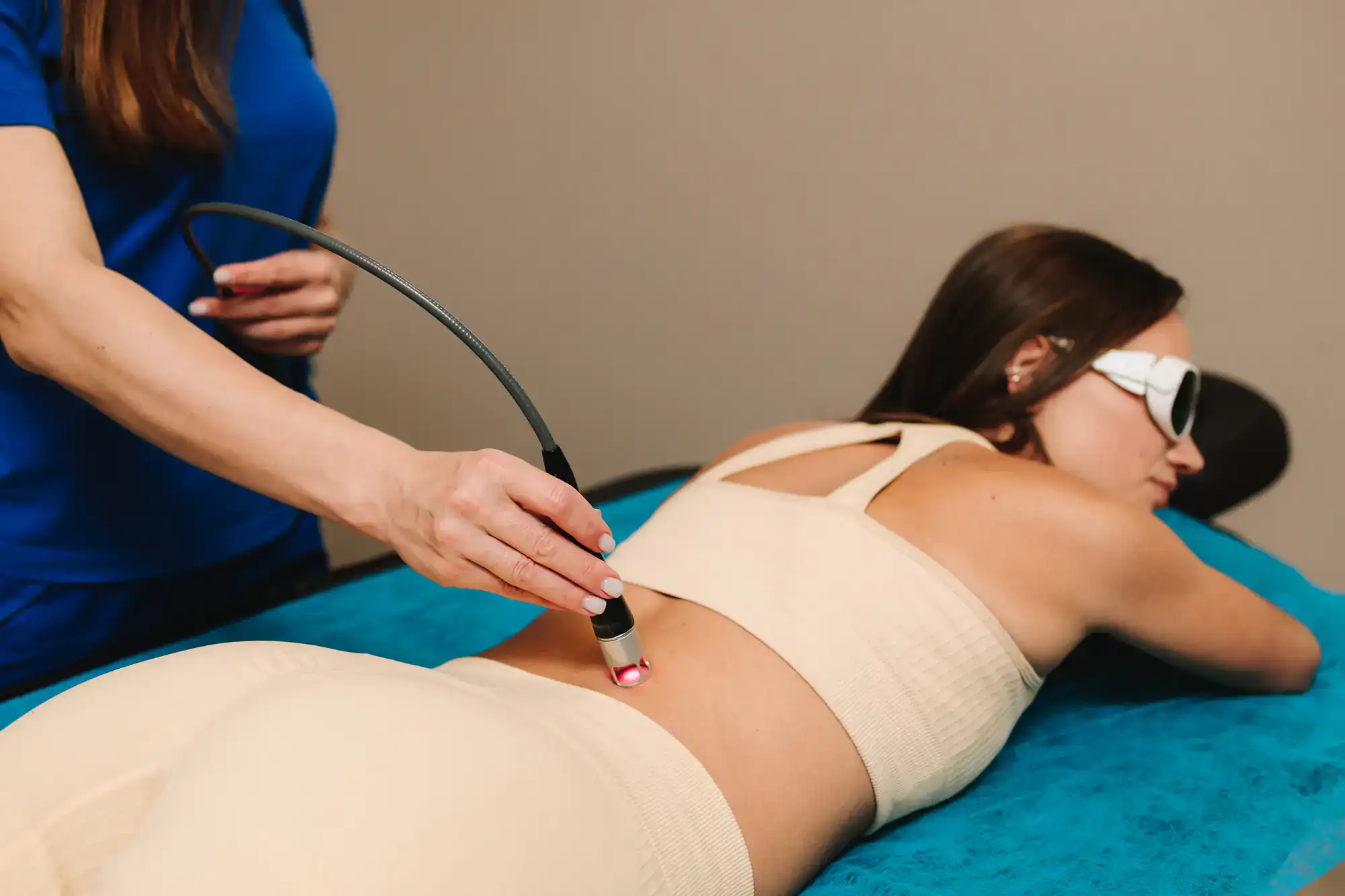
You’ve probably had a massage that felt great in the moment and wore off by Tuesday. That’s not a knock on massage — it just means the wrong tool was used for the job. If you’re dealing with chronic neck tightness, recurring lower back pain, or that stubborn knot that lives between your shoulder blades, there’s a real difference between a relaxation-focused muscle massage and targeted deep tissue therapy. Knowing which one fits your situation can change how quickly you actually feel better. Here’s what you need to understand before you book anything.
Deep tissue therapy uses slow, deliberate pressure and specific techniques — cross-fiber friction, sustained trigger point work, myofascial release — to reach the deeper layers of muscle, connective tissue, and fascia. It’s not about applying more pressure to a standard massage routine. The target tissue is different, and so is the intent.
Where a relaxation massage works on the surface to reduce stress and improve circulation, deep tissue therapy creates structural change. It breaks down adhesions — those dense, fibrous areas where muscle fibers have bound together — and restores range of motion in tissue that’s become restricted over time. The goal is lasting improvement, not just temporary relief.
Muscle massage therapy operates at a shallower depth and uses broader, flowing strokes to address surface-level tension, improve circulation, and activate the parasympathetic nervous system — the part of your body that tells everything to calm down. It’s genuinely effective for stress-related tightness, general fatigue, and the kind of tension that builds up from a hard week rather than a structural problem in the tissue itself.
The distinction matters because chronic pain and stress tension feel similar from the outside but have different root causes. If your shoulders are tight because you’ve been anxious and overworked, muscle massage therapy can do a lot of good. If your shoulders are tight because years of commuting have pulled your posture forward and shortened your pec minor, surface work isn’t going to touch the underlying issue.
This is where people get frustrated. They book a massage, feel better for a day or two, and then the pain comes right back. It’s not that massage doesn’t work — it’s that muscle massage therapy wasn’t designed to address deep fascial restriction or chronic postural dysfunction. It was designed for something else, and it does that thing well.
Understanding this distinction also helps you set realistic expectations. Muscle massage therapy is a legitimate and valuable treatment. It reduces cortisol, increases oxytocin, supports recovery, and genuinely improves how you feel. But if you’re dealing with something that has been building for months or years, it’s more of a maintenance tool than a corrective one.
Deep tissue massage therapy becomes the right call when you’re dealing with something that has a structural component — chronic low back pain, neck and shoulder stiffness that doesn’t resolve with rest, limited range of motion, scar tissue from an old injury, or the kind of tension that feels like it lives in the bone rather than the muscle.
A clinical study found that deep tissue massage reduced chronic low back pain at a level comparable to nonsteroidal anti-inflammatory drugs like ibuprofen. That’s not a minor finding. It means that for the right condition, deep tissue therapy isn’t just a pleasant alternative to pain medication — it’s a clinically supported one.
The technique itself explains why. When a therapist uses sustained pressure on a trigger point — one of those dense, hypersensitive spots that refer pain to other areas — the tissue gradually releases. Cross-fiber friction breaks down adhesions that have formed in the muscle belly or at the tendon attachment. Myofascial release addresses the connective tissue web that surrounds and connects every structure in the body. These aren’t things you can accomplish with lighter pressure or broader strokes, no matter how skilled the therapist.
It’s also worth understanding that deep tissue therapy should not be painful in a sharp or unbearable way. The sensation is often described as productive discomfort — firm pressure on an area that needs work, with a quality that feels different from injury pain. A skilled therapist finds what’s sometimes called the therapeutic edge: the level of pressure that creates a release response without triggering the muscle to guard and contract. If a session ever crosses into genuine pain, that’s a communication issue, not a requirement of the technique.
Want live answers?
Connect with a Beauty Lab Long Island expert for fast, friendly support.
Nassau County residents face a particular set of physical demands that most generic wellness content doesn’t account for. A large portion of people here spend 45 to 90 minutes each way on the LIRR, sitting in positions that compress the lumbar spine, shorten the hip flexors, and pull the head forward. Add a full day at a desk and a reverse commute home, and you have a recipe for the kind of chronic postural dysfunction that accumulates quietly until it becomes hard to ignore.
That context matters when you’re choosing between muscle massage and deep tissue work. If your pain has a clear postural or structural driver — and for many Nassau County commuters and desk workers, it does — you need a treatment plan that addresses the cause, not just the symptom.
People often wonder whether they should be seeing a physical therapist instead of booking a massage. It’s a fair question, and the honest answer is that it depends on what’s going on.
Physical therapy deep tissue massage is performed or prescribed by a licensed physical therapist as part of a formal rehabilitation program. It’s typically used post-injury, post-surgery, or for diagnosed musculoskeletal conditions, and it may be covered by insurance within that clinical context. The focus is rehabilitation — restoring function after something has gone wrong.
What we do at Beauty Lab sits in a different category, but it’s not as far from clinical care as a standard day spa. Our team includes a physician, nurse practitioners, and registered nurses on-site. That means before any deep tissue session, there’s a level of health oversight that simply doesn’t exist at most massage studios or wellness centers. Contraindications — blood clots, recent surgery, osteoporosis, certain skin conditions — get caught before they become problems. Your therapist isn’t working in isolation; they’re working within a medically informed environment.
For the majority of people dealing with chronic tension, postural pain, sports recovery, or general musculoskeletal discomfort that hasn’t been caused by an acute injury, this model offers something genuinely useful: clinical-grade awareness in a setting that doesn’t feel like a hospital. You get the structural work your tissue needs, with the safety net of medical oversight, and you’re not sitting in a waiting room under fluorescent lights to get it.
This distinction matters especially in Nassau County, where residents are accustomed to high-quality healthcare through systems like Northwell and NYU Langone Long Island. The expectation here isn’t just that a treatment feels good — it’s that the people delivering it actually know what they’re doing.
One of the most common mistakes people make with deep tissue therapy is treating it like a one-time fix. You book a session, feel noticeably better, and assume the problem is resolved. Then, three weeks later, the tension is back. In most cases, the treatment worked fine. The problem is that chronic patterns in tissue don’t resolve permanently after one session.
Think about it this way: if a postural imbalance has been developing for five years, the fascial tissue has adapted around it. The muscles on one side have shortened; the opposing muscles have lengthened and weakened. One deep tissue session can create meaningful relief by releasing the most acute restriction, but it can’t remodel years of tissue adaptation in an hour.
This is why we build treatment programs rather than selling individual appointments. A structured series of sessions allows us to track what’s responding, adjust the approach based on what we’re finding, and make cumulative progress rather than starting from scratch each time. For people dealing with recurring neck and shoulder pain, chronic lower back issues, or the kind of hip tightness that comes from years of sitting, this program-based model produces compounding results that a single session simply cannot replicate.
There’s also a meaningful advantage in combining modalities. Pairing deep tissue therapy with lymphatic drainage massage helps clear the metabolic byproducts that get released during deep tissue work — reducing post-session soreness and supporting faster tissue recovery. Our private IV suites, which include massaging chairs and streaming entertainment, give you the option to hydrate at a cellular level before or after your session. Dehydrated tissue holds tension longer and recovers more slowly, so this isn’t a luxury add-on — it’s a practical recovery tool.
For new guests, we offer 20% off your first service, which makes it easy to experience the difference without committing to a full program upfront. Most people who come in for a single session leave with a clearer sense of what their tissue actually needs — and a plan for addressing it.
The short version: if you need to unwind and reset, muscle massage therapy does that well. If you’re dealing with chronic pain, structural tension, restricted movement, or a problem that keeps coming back no matter how many standard massages you get, deep tissue therapy is the more appropriate tool — especially when it’s delivered in an environment with real medical oversight.
Nassau County residents deal with specific, real physical demands — long commutes, desk-heavy careers, an active South Shore lifestyle — and the bodywork you choose should reflect that reality, not a generic wellness template.
If you’re ready to figure out what your body actually needs, we’re located at 2073 Merrick Road in Merrick, NY. New guests receive 20% off their first service. Reach out to schedule a consultation and we’ll help you build a plan that addresses the root cause — not just the symptom.
Summary:
Article details:
Share: