Summary:
You’ve probably heard the term by now — from a friend who swears by it after surgery, a post on your feed, or maybe your own doctor who recommended it. But what is lymphatic drainage, exactly, and does it actually do what people say it does?
The short answer is yes — but with an important caveat. It works when it’s done correctly, by someone trained to do it, in a setting where your health history is actually taken into account. This guide covers the science behind it, the conditions it helps with, and the questions most people are too busy to look up on their own.
How the Lymphatic System Works — and Why It Gets Stuck
Your lymphatic system is a network of vessels, nodes, and fluid running throughout your entire body. It collects waste, bacteria, and excess fluid from your tissues and routes it out of the body. The problem is that unlike your circulatory system, it has no pump. Your heart moves blood automatically. Your lymphatic system depends on movement, breathing, and manual stimulation to keep flowing.
When it slows down — whether from surgery, illness, a sedentary period, or just the general stress of daily life — fluid builds up. That’s when you start to notice the signs: persistent puffiness, heaviness in the limbs, skin that feels thick or tight, fatigue that sleep doesn’t fix. It’s not imaginary, and it’s not just “normal aging.”
What Lymphatic Therapy Actually Does Inside Your Body
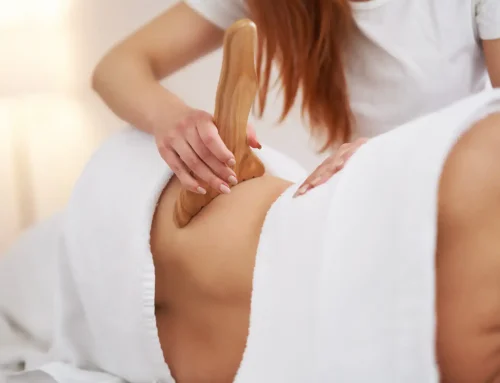
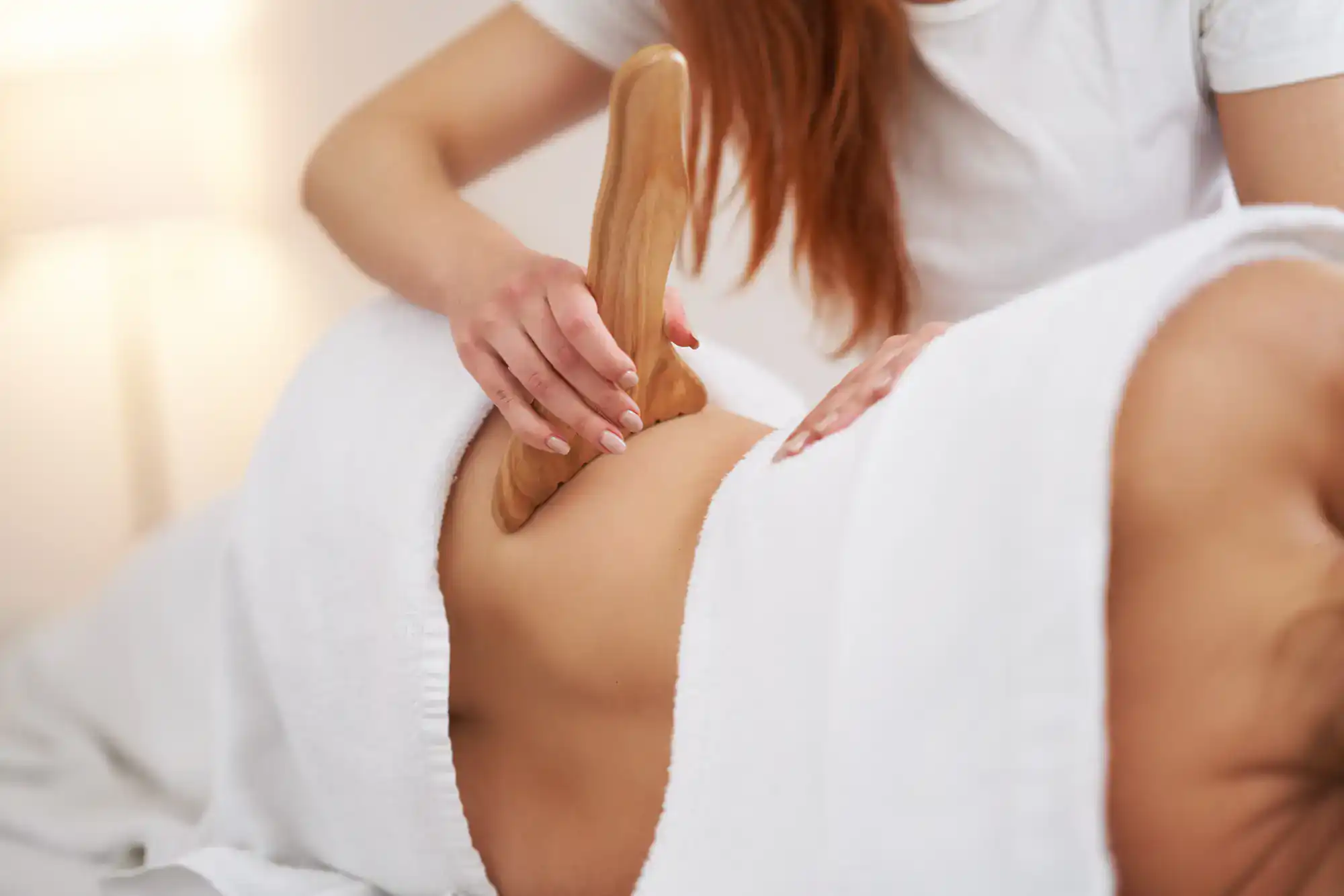
Manual lymphatic drainage is a specific, trained technique — not a variation of deep-tissue massage with a different name. The strokes are intentionally gentle and follow a precise sequence based on lymphatic anatomy, typically starting at the neck where the primary lymphatic ducts empty into the bloodstream, then working outward to route fluid toward functioning lymph node clusters.
The pressure used is lighter than most people expect. That’s not a shortcut — it’s the point. The lymphatic capillaries sit just beneath the skin, and heavy pressure actually bypasses them. A therapist who pushes hard isn’t doing better work; they’re doing different work that misses the target entirely.
What you’re actually accomplishing with proper lymphatic therapy is mechanical: you’re moving stagnant fluid, reducing the pressure it creates in surrounding tissue, and giving your immune system a clearer path to do its job. Research has found that when lymphatic fluid goes unaddressed for too long, it can lead to fibrosis — a hardening of the tissue — and a buildup of fatty tissue that the body can no longer mobilize on its own. That’s why early intervention matters, especially after surgery.
The body carries roughly 600 to 700 lymph nodes and circulates lymph fluid daily. When that system is working, you don’t notice it. When it isn’t, the effects accumulate — and they rarely resolve without some form of direct support.
This is why lymphatic drainage has been used clinically for decades, particularly for lymphedema following cancer treatment, chronic venous insufficiency, fibromyalgia, and rheumatoid arthritis. It isn’t a wellness trend that emerged from social media. The foundational technique was developed by Dr. Emil Vodder in the 1930s and has been refined and studied ever since.
Who Should Actually Consider Lymphatic Drainage Treatment
The most common reason people seek out lymphatic drainage treatment is post-surgical recovery. Plastic surgeons across the New York metro area routinely recommend it after liposuction, tummy tucks, BBLs, and breast augmentation — and for good reason. Starting sessions within the first few days after a procedure significantly reduces swelling, shortens recovery time, and lowers the risk of fibrosis and fluid hardening. Many Nassau County residents have procedures done in Manhattan or at Long Island surgical centers and then need to figure out post-op care closer to home. That’s a real gap this treatment fills.
Beyond surgery, lymphatic drainage is genuinely useful for people dealing with chronic inflammation, frequent illness, persistent bloating that doesn’t respond to diet, or that general feeling of being “off” that’s hard to name but easy to recognize. Athletes and active people use it for recovery. People going through allergy season — and if you live on Long Island, you know how brutal spring can be — often find it helpful for sinus congestion and facial puffiness.
It’s also worth being honest about what it isn’t. Lymphatic drainage is not a weight-loss treatment in the conventional sense. It can reduce fluid retention and temporarily affect the number on the scale, but it doesn’t burn fat. What it does do — consistently, when performed correctly — is reduce swelling, support immune function, improve circulation, and help your body recover from the things that slow it down.
There are also people who shouldn’t receive it, at least not without medical clearance: anyone with an active infection, a blood clot, congestive heart failure, or active malignancy. This is exactly why the setting matters. A trained provider in a medically supervised environment will ask about your health history before touching you. A spa that offers “lymphatic massage” as an add-on may not.
Lymphatic Drainage Treatment in Nassau County: Why the Setting Changes Everything
There’s a version of this treatment available at almost every spa on Long Island now. And there’s a version available at a medically supervised boutique where a doctor, nurse practitioners, and registered nurses are part of your care — where your health history is reviewed before your first session and your program is built around your actual situation.
Those are not the same thing, even if they share a name on the menu.
For Nassau County residents who’ve had surgery, are managing a chronic condition, or simply want to make sure what they’re paying for is actually working, the distinction is worth understanding before you book.
What Makes a Medically Supervised Approach Different for Long Island Patients
At a standard spa, the intake process — if there is one — typically covers allergies and pressure preferences. At a medically supervised practice like ours, it covers your surgical history, current medications, underlying health conditions, and any contraindications that would change how or whether treatment should proceed. That’s not a small difference.
For post-surgical clients especially, this matters enormously. If you’ve had a procedure done in the city or at a Long Island surgical center and your surgeon has recommended lymphatic drainage, you want someone who understands the clinical context of your recovery — not just someone who knows how to perform the strokes. The presence of on-site medical professionals means that if something looks or feels off during your session, there’s someone qualified to evaluate it.
Beyond safety, the medical supervision model changes the quality of the program itself. Rather than a single session that may or may not address what’s actually happening in your body, we build a personalized program around your goals, your timeline, and your health history. That’s how you get lasting results rather than a temporary reduction in puffiness that disappears within a day. Lymphatic drainage works best as a series — not a one-time visit — and a provider who understands your full picture can actually tell you how many sessions make sense for your situation and why.
This is also where our boutique model earns its value. You’re not being moved through a schedule. You’re being assessed, monitored, and adjusted as your body responds. For Nassau County residents who’ve been commuting to Manhattan for this level of care, the fact that it’s now available on Merrick Road — accessible from Bellmore, Wantagh, Freeport, Rockville Centre, and most of the South Shore in under 15 minutes — changes the calculation considerably.
Frequently Asked Questions About Lymphatic Drainage from Nassau County Residents
One of the most common questions is whether it hurts. It shouldn’t. Proper manual lymphatic drainage is gentle — often described as rhythmic and deeply relaxing. If a session is painful, something is wrong with the technique. The light pressure isn’t a sign that nothing is happening; it’s a sign that the therapist knows what they’re doing.
People also ask how many sessions they’ll need. The honest answer is that it depends on why you’re coming in. Post-surgical recovery typically calls for more frequent sessions in the first few weeks, then tapering off as swelling resolves. For general wellness or chronic inflammation, a series of weekly sessions followed by monthly maintenance is common. We assess your situation and tell you what actually makes sense for your goals.
Another question that comes up often, particularly from Nassau County residents who’ve had cosmetic procedures: can I get this done locally, or do I need to go back to the city? You don’t need to go to the city. What matters isn’t the zip code — it’s the training, the clinical oversight, and the individualized approach. We offer all of those right here in Merrick.
Some people ask whether lymphatic drainage is covered by insurance. In most cases, it isn’t when performed in a wellness or aesthetic context, though it may be covered when prescribed for a diagnosed condition like lymphedema. It’s worth checking with your provider and your insurance plan if that’s a factor in your decision.
Finally, a lot of people want to know: is this actually different from a regular massage? Yes — meaningfully so. The technique, the pressure, the sequence, and the physiological target are all different. A deep-tissue massage works on muscle. Lymphatic drainage works on a fluid system that sits just beneath the skin. They serve different purposes, and one cannot substitute for the other.
Ready to Try Lymphatic Drainage in Nassau County, NY?
If you’ve made it this far, you probably already have a sense of whether this is something worth exploring for yourself. The science is solid, the applications are real, and the difference between a well-executed treatment and a generic one is significant enough to pay attention to when you’re choosing where to go.
The most important thing is finding a provider where your health history is taken seriously, your program is built around your actual needs, and someone with medical training is involved in your care — not just your booking.
We’re located at 2073 Merrick Road in Merrick, NY. New guests receive 20% off their first service, which is a reasonable way to find out whether this is the right fit before committing to a full program. Reach out to our team directly to ask questions or schedule your first visit.