Summary:
If you’ve been feeling puffy, heavy, or just off — like your body is holding onto something it shouldn’t — you’re not imagining it. For a lot of people in Nassau County, that feeling has a name: a sluggish lymphatic system. Lymphatic drainage massage is one of the few treatments with real clinical backing for this exact problem. It’s been used in medical settings since the 1930s, and today it’s one of the most requested services at our Merrick location. This page covers what it actually is, how it works, who it benefits, and what to look for in a provider before you book.
What Is Lymphatic Drainage Treatment and Why Does It Matter?
Your lymphatic system is a network of about 600 nodes and vessels running throughout your entire body. Every day, roughly three liters of fluid seep into your tissues from your bloodstream — fluid that your veins can’t fully reclaim on their own. Your lymphatic system is responsible for collecting that fluid, filtering it, and returning it to circulation. When it slows down, that fluid accumulates. You feel it as puffiness, swelling, fatigue, or a general sense of heaviness.
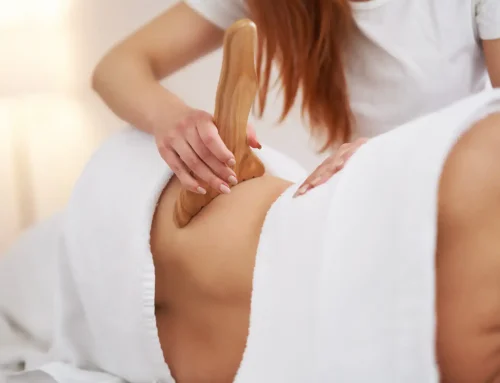
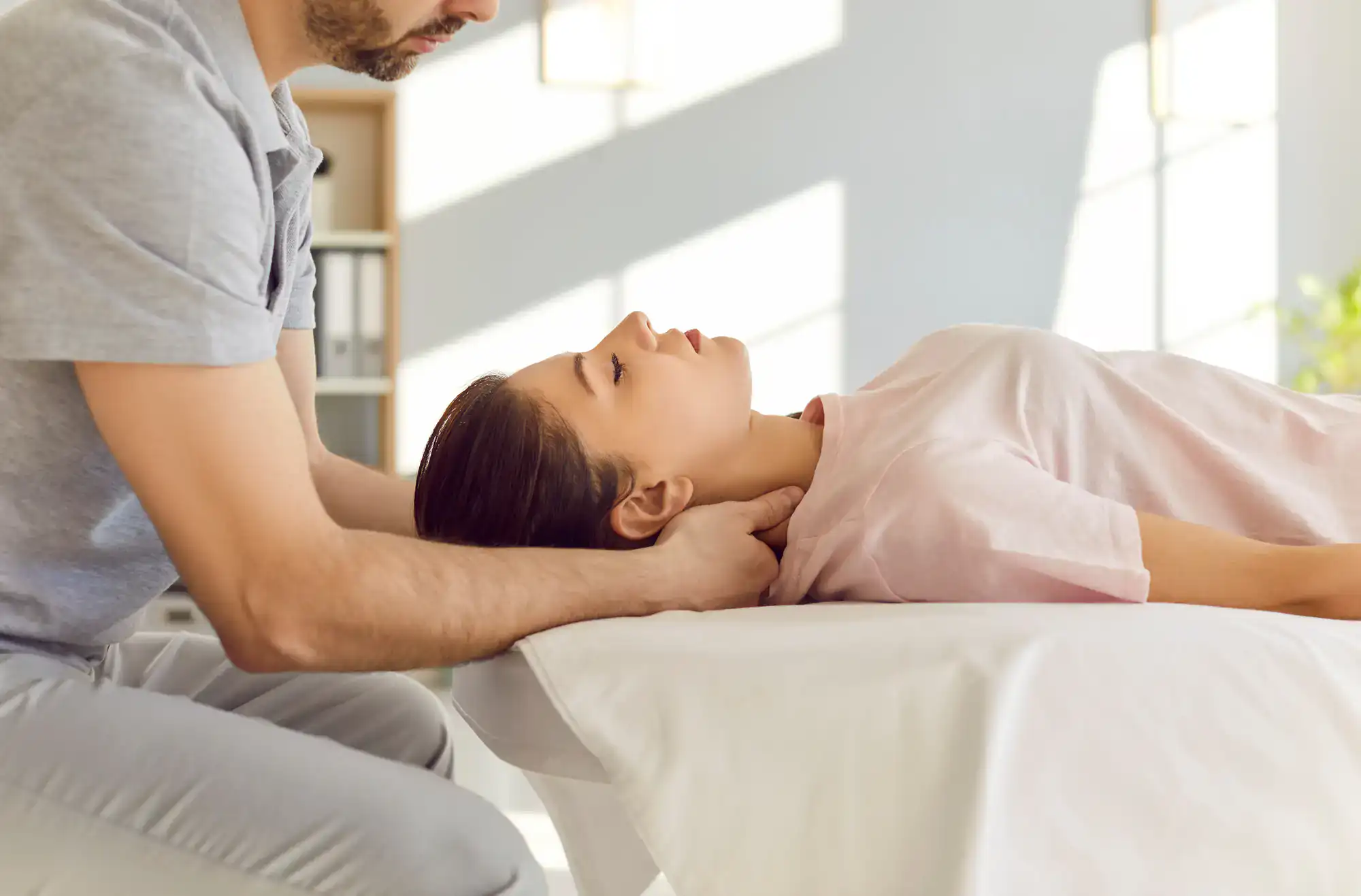
Lymphatic drainage treatment is a hands-on technique designed to manually stimulate that flow. It’s not a deep-pressure massage. It’s a series of light, rhythmic strokes that follow the body’s natural lymphatic pathways, guiding fluid toward healthy lymph nodes where it can be processed and cleared. The pressure is deliberately gentle — because lymphatic vessels sit just beneath the skin’s surface, and heavy pressure actually compresses them and stops the flow.
Lymphatic Therapy: What the Science Actually Supports
This isn’t a trend that showed up on social media three years ago. Manual lymphatic drainage therapy has been a recognized clinical intervention since the 1930s, when Dr. Emil Vodder developed the original technique. By 1936, it had gained traction in the medical community, and it’s been used by physical therapists, oncology nurses, and certified lymphedema therapists ever since.
The research supports it for a meaningful range of conditions. Post-surgical swelling is one of the most well-documented applications — particularly after liposuction, tummy tucks, BBL procedures, and facelifts, where lymphatic drainage helps reduce edema, prevent fibrosis, and improve cosmetic outcomes. For people who’ve had breast cancer treatment, the stakes are even higher: roughly one in five women who undergo that treatment develops lymphedema, a chronic condition where lymph fluid accumulates and causes persistent swelling. Manual lymphatic drainage is a first-line intervention for managing it.
Beyond those clinical applications, lymphatic therapy also shows meaningful results for fibromyalgia, where a 2021 review found it may improve quality of life. It’s used for general immune support, since the lymphatic system plays a central role in producing and circulating white blood cells. And for people who simply feel bloated, sluggish, or run-down without a clear diagnosis, regular sessions often produce the kind of results that are hard to explain but easy to feel — lighter, clearer, more like yourself.
What it won’t do is burn fat. Lymphatic drainage can reduce temporary water retention and puffiness, which sometimes looks like a change in body composition. But that’s fluid reduction, not fat loss. Any provider claiming otherwise is overselling the service.
Manual Lymphatic Drainage: Why Technique and Training Are Non-Negotiable
Here’s something worth knowing before you book anywhere: in New York State, manual lymphatic drainage cannot legally be performed by an unlicensed esthetician or beauty practitioner. The NYS Office of the Professions is explicit about this — MLD is excluded from what unlicensed practitioners are permitted to do. It requires a licensed massage therapist or a qualified medical professional.
New York’s licensing standard for massage therapists is among the highest in the country — 1,000 hours of required education before licensure. But even that baseline doesn’t automatically qualify someone to perform lymphatic drainage. Specialized post-license training is required: a Certified Manual Lymphatic Drainage Therapist (CMLDT) designation requires a minimum of 40 classroom hours, and a full Certified Lymphedema Therapist (CLT) credential requires 135 hours of focused training through an accredited institution.
This matters because the market is crowded with providers using the phrase “lymphatic massage” without the training to back it up. A four-hour online course is not preparation for clinical lymphatic work. And the consequences of poor technique aren’t just ineffective sessions — for post-surgical clients or those with underlying health conditions, untrained hands can cause real harm. When you’re evaluating providers in Nassau County, asking about specific MLD credentials isn’t being difficult. It’s being responsible.
We perform our lymphatic drainage sessions with licensed therapists in a medically supervised environment — with doctors, nurse practitioners, and RNs on-site. That’s not standard for a spa. It’s a meaningful difference, especially if you’re recovering from a procedure or managing a chronic condition.
Manual Lymphatic Drainage for Nassau County Residents: Who It's Right For
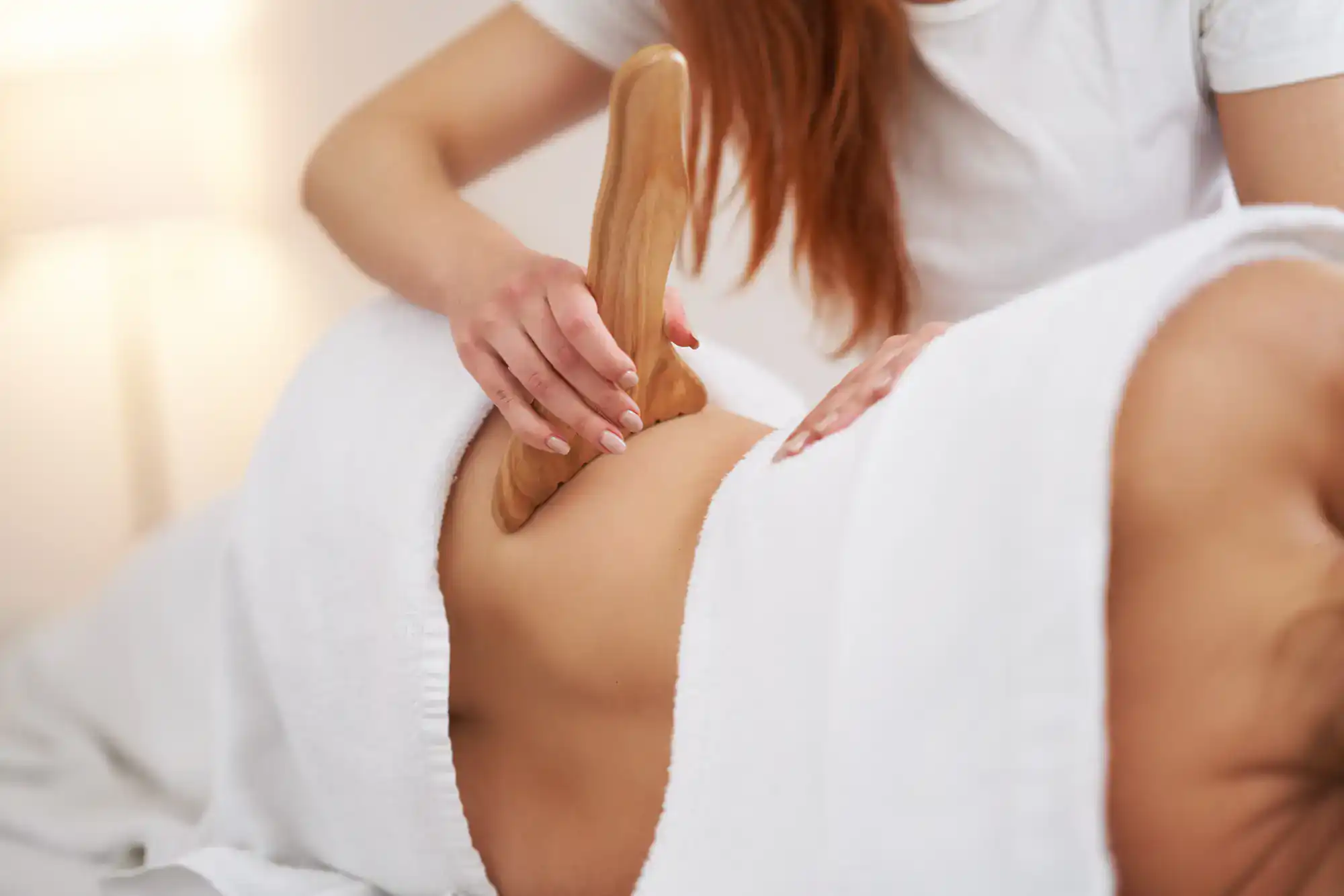
Nassau County has one of the more active cosmetic surgery markets in New York State. Liposuction, tummy tucks, and BBL procedures are common, and plastic surgeons here routinely recommend post-surgical lymphatic drainage as part of the recovery process. If you’ve had a procedure and your surgeon mentioned it, this is why: lymphatic drainage reduces swelling, helps prevent the hardened scar tissue known as fibrosis, and can meaningfully shorten your recovery timeline.
But post-surgical recovery is just one entry point. General wellness clients — people who commute into the city, sit at a desk for eight hours, and feel chronically inflamed or fatigued — often find that regular sessions help them feel more like themselves. Long Island’s humid summers don’t help either; heat-related water retention is a real and common issue, particularly on the South Shore.
What to Expect During a Lymph Drainage Massage Session
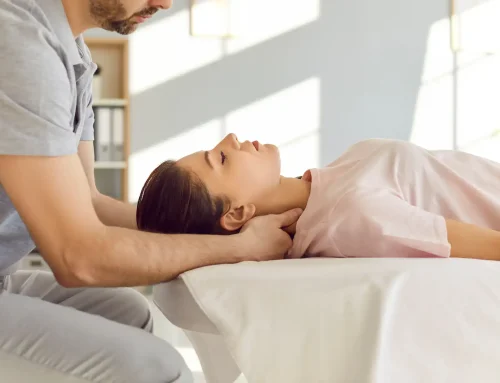
First-timers are almost always surprised by how gentle it is. If you’re expecting something that feels like a deep tissue therapy massage, you’ll need to recalibrate. The strokes are light, slow, and rhythmic — deliberately so. Some clients describe it as barely feeling like anything is happening. That’s not a sign the therapist is doing it wrong. It’s a sign they’re doing it right.
A well-structured session typically begins with what’s called the “clearing” phase — the therapist works at the lymph node sites first, creating space for fluid to drain into. From there, they work outward along the lymphatic pathways, guiding accumulated fluid toward those cleared nodes. The direction of the strokes matters. Random rubbing doesn’t accomplish what targeted, directional technique does.
Sessions generally run 60 to 90 minutes depending on the area being treated and your goals. For post-surgical clients, the focus is often on the treated area and surrounding tissue. For general wellness clients, full-body sessions are common. After the session, drinking water helps support your body’s natural clearance process, and avoiding alcohol for the rest of the day is usually recommended.
Most people leave feeling noticeably lighter — less puffiness in the face, less heaviness in the legs, a general sense of having cleared something out. Results from a single session are real but temporary for chronic conditions. For lasting improvement, a series of sessions is typically more effective than a one-time treatment. This is why we build personalized programs rather than just booking appointments — because what your body needs after a BBL is different from what it needs for chronic lymphedema, and a generic package doesn’t account for that.
Frequently Asked Questions About Lymphatic Drainage Massage in Nassau County
One of the most common questions we hear is: does it hurt? No. Lymphatic drainage uses feather-light pressure — far gentler than Swedish massage, let alone deep tissue. The vessels being targeted sit just beneath the skin, and heavy pressure would actually work against the treatment. If a session is painful, something is off.
People also ask whether one session is enough. For general de-puffing before an event — a wedding, a beach trip, the kind of thing that comes up constantly for Nassau County residents heading into summer — a single session can make a noticeable difference. For post-surgical recovery, chronic lymphedema, or immune support, a series of sessions is the standard of care. How many depends on your specific situation, which is something we assess in consultation rather than guessing at with a preset package.
A question we get specifically from Nassau County clients who’ve had cosmetic procedures: when can I start? The timing depends on your surgeon’s guidance and the specific procedure. Generally, lymphatic drainage can begin within the first week post-surgery, sometimes sooner. We work in coordination with your care team to make sure the timing and approach are appropriate for your recovery stage.
Is it safe? For most people, yes. But there are contraindications — active infections, uncontrolled heart failure, blood clots or DVT, fever, and active cancer without oncologist approval are among the situations where lymphatic drainage should be avoided or approached with medical clearance. This is exactly why having medical staff on-site matters. Our team can screen for contraindications and make informed decisions about your care in a way that a standalone massage studio simply isn’t equipped to do.
Finally: does insurance cover it? In some cases, particularly for diagnosed lymphedema, FSA and HSA funds can be applied. Coverage varies, so it’s worth checking with your provider. We’re happy to discuss what documentation may support a reimbursement claim.
Lymphatic Drainage Massage in Merrick, NY: What to Look for Before You Book
The short version: lymphatic drainage massage is clinically supported, genuinely effective for the right conditions, and worth taking seriously — which means the provider you choose matters. Credentials, medical oversight, and a thorough intake process aren’t extras. They’re the baseline for safe, effective treatment.
If you’re in Nassau County — whether you’re recovering from a procedure, managing chronic swelling, or just looking to feel less run-down — the standard you should expect is a licensed, specially trained therapist working in an environment with medical oversight. That’s what we offer at Beauty Lab, located at 2073 Merrick Road in Merrick.
New guests receive 20% off their first service. If you have questions before booking, we’re easy to reach. The team at Beauty Lab is here to help you figure out whether lymphatic drainage is the right fit — and if it is, to make sure it’s done properly.